


How Churchkhela Was Born – History and Tradition
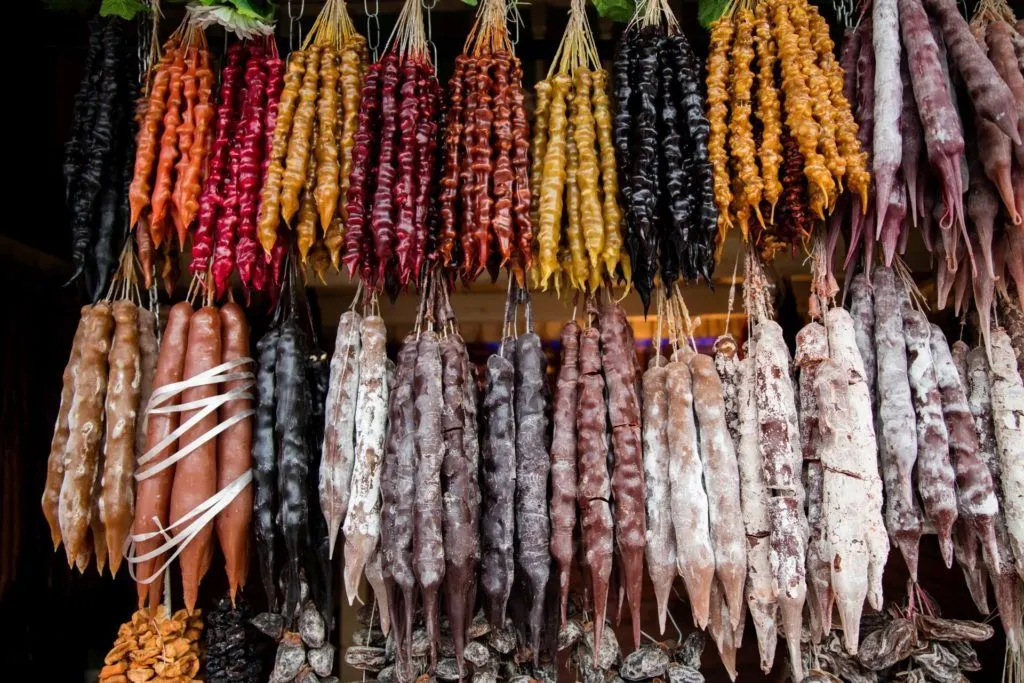
The History of Churchkhela – Traditional Georgian Candy
Churchkhela is one of Georgia’s most iconic traditional sweets, often called the “Georgian Snickers” or “Georgian Gummy Candy.” Its history spans centuries, with roots in rural Georgian communities where it was made as a natural, energy-rich treat for harvest seasons and long winter months. Churchkhela is particularly associated with regions like Kakheti and Racha, where walnuts, hazelnuts, and grape must were abundant.Traditionally, Churchkhela is made by threading walnuts, hazelnuts, or almonds onto a string, then dipping them repeatedly into a thickened mixture of grape must (tatara) until coated. This process is repeated several times, allowing the sweet coating to harden while remaining chewy. The resulting candy is rich in flavor, naturally sweet, and packed with nutrients, making it a popular snack for both children and adults. Historically, Churchkhela was also carried by travelers and soldiers as a portable source of energy.
Today, Churchkhela is celebrated not only as a beloved sweet but also as a symbol of Georgian culinary heritage. It is commonly enjoyed during festivals, holidays, and as a souvenir for visitors. Its unique combination of nuts and grape must makes it a distinct and unforgettable taste of Georgia.
Planning to visit Georgia and try traditional Churchkhela?
Discover the best local food experiences with our guided tours.